Every heat exchanger is leak-tested
Minimizing internal leakage is one of the essential design considerations of modern air-conditioning units. A leaking unit is inefficient and cannot properly perform any of its basic functions, i.e. fresh air supply to the indoor environment and saving energy.
This is why tightness/leakage is one of the essential markers of quality for our heat exchangers. With Recutech, you can be sure that each heat exchanger we produce is tested for tightness.

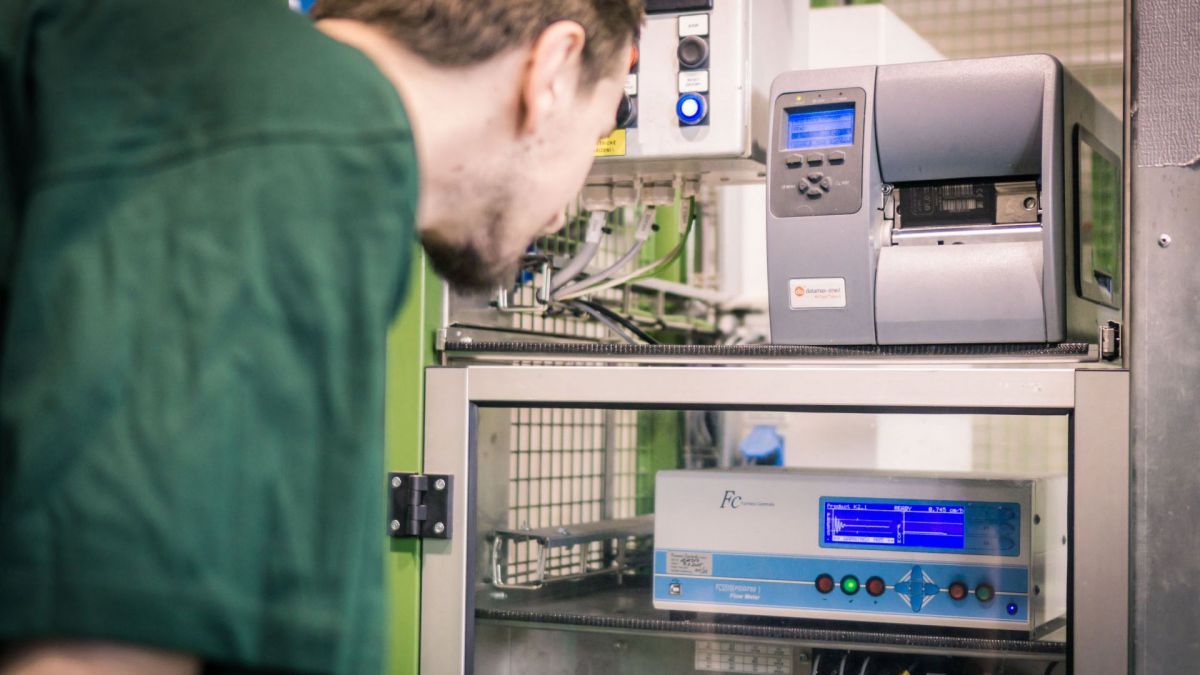
Every manufactured heat exchanger is tested for leakage during the final quality check. During this process the heat exchanger is sealed on two sides and pressurized to 250 Pa. If leakage is higher than 0.5%, the tightness testing machine will not print out the production label and the heat exchanger does not pass the quality inspection. Check out the whole process in a short video of our production.
Perfect results
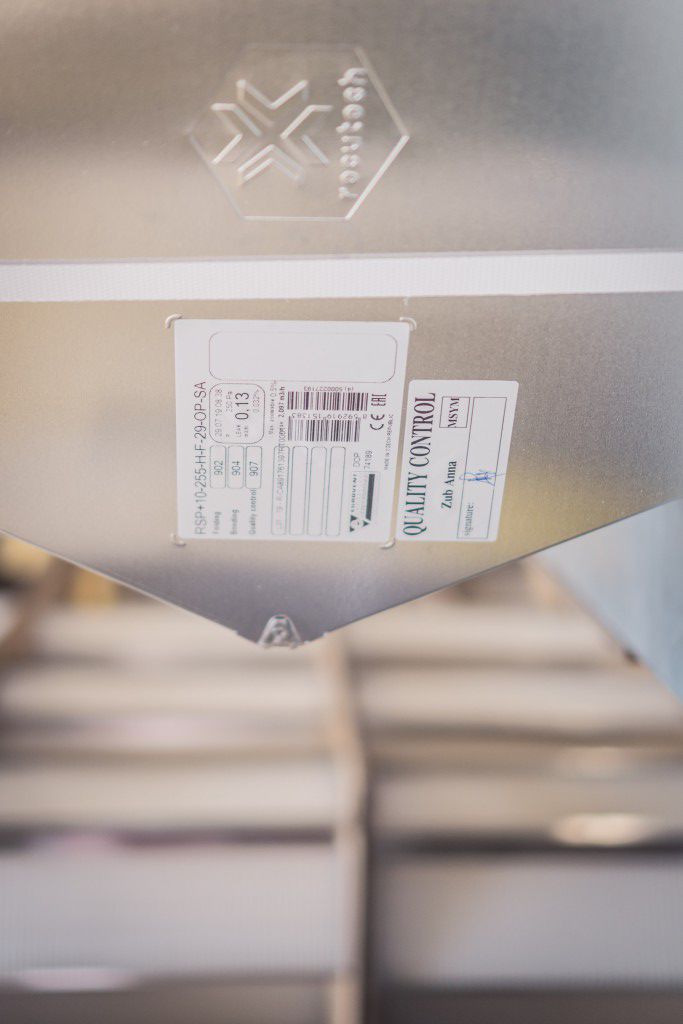
On the production label you can find the maximum allowable leakage defined by Eurovent as well as the actual measured value. In 2020 the average leakage of our heat exchangers (plastic and aluminium) amounted to 0.14%.
We have been performing these measurements for several years, and during the last 3 years we tested 211,963 pcs, achieving an average leakage of 0.14%.
Leakage of plate heat exchangers mainly occurs in the areas where plates connect and around the plate blocks, i.e. in the areas where they are connected to the heat exchanger casing. At RECUTECH, we connect plates by double-folding, which improves their strength (especially with large heat exchangers) and thus the bond’s tightness. The tight attachment of plastic plates is verified by ultrasound.

